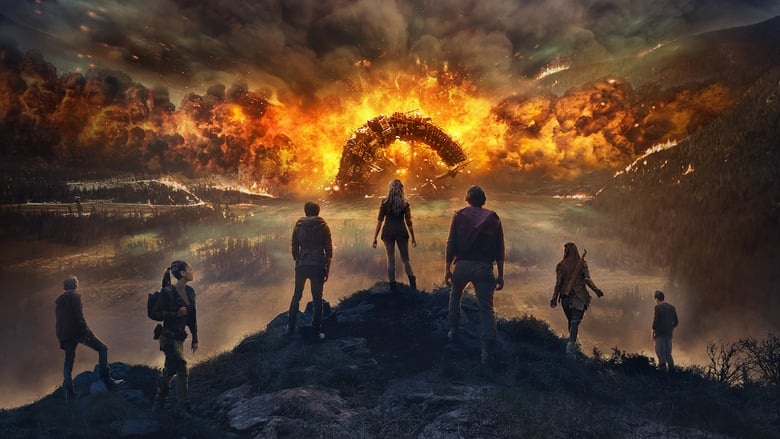
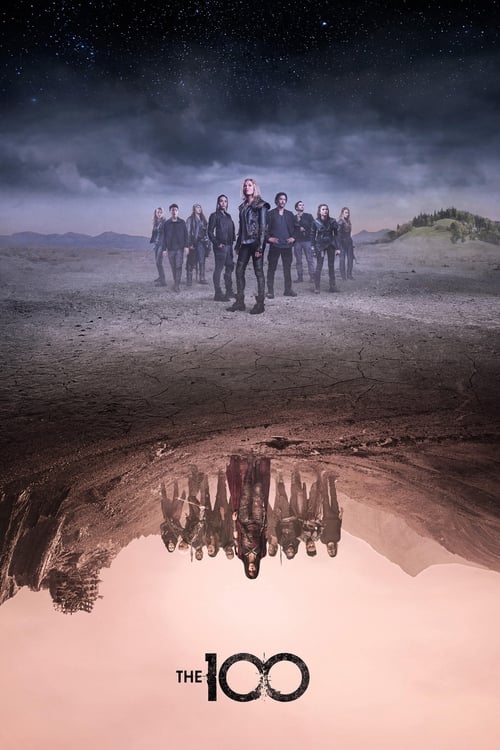


Few shows have traveled as far from their starting point as The 100. What began as a seemingly straightforward young adult survival story grew into one of the CW's most ambitious science fiction sagas, running for seven seasons and exactly 100 episodes. Across its run, the series kept asking the same uncomfortable question encoded in its tagline: is survival about who you are, or about who you become?
The Premise: A Second Chance for Humanity
The story opens in a future where nuclear catastrophe has made Earth uninhabitable. The remnants of humanity have survived for generations aboard a space station, where life is tightly controlled and even minor crimes carry severe punishment.
When the station's resources can no longer sustain its population, authorities make a brutal calculation: send 100 imprisoned juvenile offenders to the surface as expendable test subjects. If they survive, the planet may be habitable again. If they don't, little is lost.
Once on the ground, the young exiles discover a world that is wilder, stranger and more dangerous than their leaders imagined. Meanwhile, political struggles aboard the station force those in power into impossible decisions, splitting loyalties between those who want to return and those who would rather build something new.
Season Structure and Episode Format
The 100 ran for seven seasons, from its debut in 2014 until its finale in 2020, totaling exactly 100 episodes — a tidy milestone the writers acknowledged in the show's final chapter. Episodes run approximately 42 minutes, a standard network drama length.
The series follows a serialized format rather than a procedural one. Each season typically introduces a new environment, faction or threat, allowing the show to reinvent itself repeatedly without losing its central characters. Storylines build across episodes, so viewing order matters.
Because the setting expands season by season — from the forest around the landing site to entirely new territories and timeframes — later seasons look and feel noticeably different from the first, which viewers should expect going in.
Main Cast and Characters
Eliza Taylor leads the series as Clarke Griffin, a pragmatic, medically trained young woman whose choices repeatedly define the group's fate. Bob Morley plays Bellamy Blake, whose initial mission is personal but who evolves into one of the show's central figures.
Marie Avgeropoulos portrays Octavia Blake, Bellamy's sister, whose arc takes her from outsider to warrior. Lindsey Morgan plays Raven Reyes, the group's brilliant mechanic and engineer, while Richard Harmon's John Murphy serves as one of the show's great survivors — sardonic, self-interested and often fascinating.
The supporting ensemble includes Thomas McDonell as Finn Collins, Christopher Larkin as Monty Green, Tasya Teles as Echo, Luisa d'Oliveira as Emori, and JR Bourne as Russell Lightbourne. Characters die, change sides and transform over the run, so casting descriptions beyond the early seasons would venture into spoiler territory.
Creators and Production
The 100 was developed for television by Jason Rothenberg, who adapted the premise from a young adult novel and served as the series' guiding creative voice throughout its run. Production companies involved include Warner Bros. Television, Alloy Entertainment, Bonanza Productions and CBS Studios.
Behind the scenes, the production was supported by executive producers Kim Shumway, Ed Fraiman and Leslie Morgenstein, with Charles Lyall and Erica Meredith among the producers.
Despite modest early expectations, the show earned a devoted audience and sustained a reputation for taking genuine narrative risks, killing major characters and resetting its world in ways most network dramas would not dare.
Network, Broadcast Status and Reception
The series aired on The CW in the United States and is now ended, having concluded its story with the seventh season in 2020. Its final broadcast date was September 30, 2020.
On aggregate rating platforms, The 100 holds a solid 7.9 rating — respectable for a genre series that ran as long as it did. Its blend of action, drama, crime and science fiction gave it crossover appeal beyond its initial young adult audience.
Because the show is complete, viewers can watch it at their own pace without waiting for new episodes, which suits its heavily serialized storytelling style.
Themes, Tone and Style
Survival is the engine of everything in The 100 — survival of the group, of principles, of identity. The show repeatedly places characters in situations where every option costs something, and it rarely lets anyone off the hook morally. Self-discovery is a stated keyword of the series, and it shows: many arcs are less about defeating enemies than about deciding what kind of person one becomes under pressure.
Tonally, the series is darker than its young adult roots suggest. Early seasons lean on post-apocalyptic wilderness survival, while later ones broaden into space travel and speculative territory, keeping the science fiction and fantasy elements central throughout.
Visually, the show moves between gritty forest survival, sterile orbital interiors and more stylized faction cultures, giving each season a distinct texture.
Who Will Enjoy The 100
Viewers who enjoy morally complicated science fiction with serialized, high-stakes storytelling will find a lot to like. Fans of post-apocalyptic settings, ensemble dramas and character-driven conflict are the natural audience.
Those who prefer standalone episodes, light comedy or strictly optimistic endings may find the show relentless — it is a drama built on hard choices and consequence. But for anyone who wants a complete, seven-season saga with a definitive ending, The 100 delivers one of the more ambitious journeys the CW has produced.
Where to Watch The 100
In the US, The 100 is available to stream free with ads on Pluto TV. For those who prefer to own the series, all seven seasons can be purchased digitally through the Apple TV Store, Amazon Video, Google Play Movies and Fandango At Home.
Availability can vary by region and change over time, so it is worth checking your local listings on your preferred platform before buying.
Frequently asked questions
Is The 100 based on a book?
Yes. The series is based on a young adult novel, adapted for television by Jason Rothenberg. As with most adaptations, the show diverges from its source material considerably over its seven seasons, developing its own storylines and characters.
How many seasons and episodes does The 100 have?
The 100 has seven seasons and exactly 100 episodes. It premiered in 2014 and ended in 2020, with episodes running roughly 42 minutes each. The show is fully complete, so no new seasons are expected.
Is The 100 suitable for young viewers?
Despite its young adult novel origins, the show is dark and often violent, with morally complex themes aimed at mature teens and adults. Viewer discretion is advised, particularly for younger audiences.
Where can I stream The 100 in the US?
US viewers can stream The 100 free with ads on Pluto TV, or purchase episodes and full seasons digitally via the Apple TV Store, Amazon Video, Google Play Movies and Fandango At Home.
Does The 100 have a proper ending?
Yes. The series was deliberately concluded after seven seasons, with the writers reaching the milestone 100th episode and bringing the story to an intentional close in the 2020 finale.

























Comments (0)
Log in or create a free account to comment, rate and write reviews.