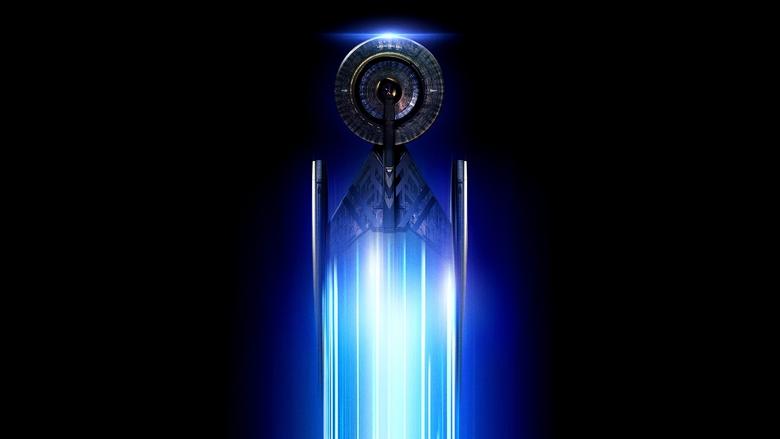
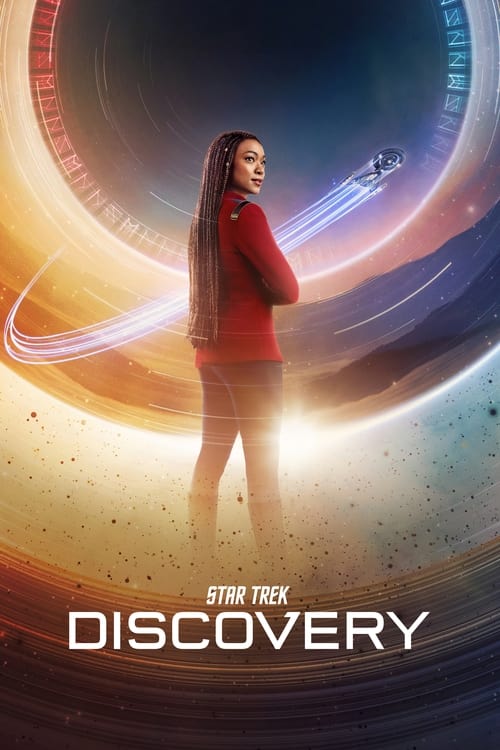


Star Trek: Discovery brought the venerable franchise back to television after a long absence, trading episodic comfort for serialized storytelling. Launched in 2017, the series follows a Starfleet officer whose path to understanding alien civilizations runs straight through her own complicated past. Across five seasons and 65 episodes, it pushed the franchise into territory its predecessors rarely dared to visit — and closed its voyage in 2024.
A New Voyage for a Familiar Universe
Few franchises carry as much baggage as Star Trek, and Discovery inherited all of it. Rather than retreading old ground, the show positioned itself as a prequel set in the franchise's main timeline, unfolding a decade before the original series. That choice gave writers room to explore an era only sketched in earlier canon, while longtime viewers could spot the seeds of familiar institutions.
The gamble paid off in one crucial respect: the protagonist is not the captain. Michael Burnham, a Starfleet officer with a fractured history, anchors the story, and the show treats her inner life as seriously as any cosmic threat. Discovery begins at the edge of the universe, as its tagline promises, but much of its drama happens within one person.
The Premise, Without Spoilers
The series centers on the starship Discovery and its crew as they carry out Starfleet's founding mission: charting new worlds and encountering new life forms. Burnham, the adopted daughter of a prominent Vulcan family, serves aboard the vessel and repeatedly finds herself at the intersection of scientific mystery and moral crisis.
Early seasons lean on the keywords that define the show — space war, artificial intelligence, dystopia, exploration — while later ones expand the canvas considerably. The Prime Directive, phasers, and alien encounters all feature, but the emotional throughline stays constant: to understand what is truly alien, a person must first come to terms with themselves.
Season Structure and Episode Format
Discovery ran for five seasons totaling 65 episodes. Unlike the standalone adventures of classic Trek, the show embraced long-form arcs, with each season built around a central mission that episodes advance piece by piece. Cliffhangers, serialized character development, and season-spanning mysteries define the format.
That structure means the series rewards binge-watching but demands commitment. A viewer dropping in mid-season will find plot threads already in motion. Each season functions as a chapter with its own antagonist and stakes, while the ensemble evolves around Burnham as cast members arrive, depart, and grow.
Main Cast and Characters
Sonequa Martin-Green leads the ensemble as Michael Burnham, a role that demands both action-hero physicality and emotional depth. Doug Jones plays Saru, a Kelpien science officer whose species-based anxieties make him one of the franchise's most distinctive characters. Mary Wiseman's Sylvia Tilly provides comic relief and surprising resilience, while Anthony Rapp's Paul Stamets brings a prickly brilliance to the engineering seat.
The supporting roster is deep. Jason Isaacs portrays Gabriel Lorca, a captain whose methods raise questions. Anson Mount's Christopher Pike became a fan favorite during his tenure. Wilson Cruz plays Hugh Culber, Shazad Latif plays Ash Tyler, and Blu del Barrio joins later seasons as Adira Tal. Maulik Pancholy appears as Dr. Nambue.
Creators and Production
Bryan Fuller and Alex Kurtzman created the series, with Kurtzman's Secret Hideout serving as a production hub alongside Roddenberry Entertainment and CBS Studios. Fuller's departure early in development left Kurtzman to steer the show, and his stewardship extended across the expanded Trek television universe that followed.
Executive producers Elizabeth Kruger, Frank Siracusa, and Aaron Baiers oversaw the run, with Ted Miller producing. The production values are cinematic — this is one of the most expensive-looking entries in the franchise, with design work that reimagines classic iconography for modern audiences rather than copying it outright.
Network, Platform, and Broadcast Status
Discovery premiered on CBS All Access, the streaming service that later became Paramount+, and it remained a flagship title there for its entire run. As the first Star Trek series made primarily for streaming, it helped establish the platform's identity and paved the way for subsequent Trek shows.
The series concluded in 2024 after its fifth season, and its status is officially ended. All five seasons are available in full, making this a complete story from premiere to finale — a rarity in modern genre television.
Themes, Tone, and Style
Tonally, Discovery sits between the optimism of classic Trek and the grit of contemporary prestige drama. War, loss, and institutional failure feature prominently, especially early on, yet the show never abandons the franchise's core belief that curiosity and cooperation outlast conflict. Later seasons lean back toward hopeful exploration.
Visually, the series favors bold redesigns: new ship interiors, new alien prosthetics, and a saturated, film-like palette. Serialized pacing replaces the problem-of-the-week formula, and character relationships — found family, mentorship, reconciliation — carry as much weight as any space battle.
Who Will Enjoy It
Viewers who enjoy serialized science fiction with strong character arcs will find plenty here, even without prior Trek knowledge. The show assumes no encyclopedic familiarity; newcomers can enter cold. Fans of ensemble dramas, morally complicated protagonists, and high-concept season arcs are the natural audience.
Lifelong Trekkies are a more divided camp. Those who prize canon fidelity and episodic structure may bristle at the redesigns and pacing, while those open to reinvention generally embrace it. The show's own rating of 6.9 reflects that split reception — ambitious, sometimes divisive, rarely boring.
Where to Watch
In the US, the primary home is Paramount+, available through several channels including the Paramount+ Amazon Channel, the Paramount+ Roku Premium Channel, and the Paramount Plus Apple TV channel. The Paramount Plus Essential tier offers the series as part of its lineup.
For viewers who prefer owning episodes, digital purchases are available through the Apple TV Store, Google Play Movies, Fandango At Home, and Amazon Video. Availability may vary by region, so checking the current catalog on your platform of choice is worthwhile.
Frequently asked questions
How many seasons of Star Trek: Discovery are there?
Five seasons and 65 episodes in total. The series ran from 2017 to 2024 and is officially ended, so the story is complete from beginning to finale with no cliffhanger awaiting renewal.
Do I need to watch other Star Trek shows first?
No. Discovery is designed to be accessible to newcomers and assumes no prior knowledge. Familiarity with the franchise adds extra resonance in places, but the central characters and arcs stand on their own.
Is Star Trek: Discovery a prequel?
Yes. The series is set in the main franchise timeline roughly a decade before the original Star Trek series, exploring an era of Starfleet history that earlier shows only touched on briefly.
Who plays Michael Burnham?
Sonequa Martin-Green. Burnham is the show's central character, a Starfleet officer and adopted daughter whose personal journey anchors all five seasons of the series.
Where can I stream Star Trek: Discovery in the US?
Paramount+ carries all five seasons, including the Essential tier. It is also available via Paramount+ channels on Amazon, Roku, and Apple TV, or for digital purchase on Apple TV Store, Google Play, Fandango At Home, and Amazon Video.


























Comments (0)
Log in or create a free account to comment, rate and write reviews.