



Some anime ask what it would feel like to live forever. To Your Eternity asks something harder: what it would take for a being that cannot die to become truly alive. Adapted from a celebrated manga, this Japanese fantasy series ran for three seasons on NHK before concluding in 2026, earning a devoted following along the way. Its blend of fairy-tale simplicity and emotional depth makes it one of the most distinctive animated dramas of recent years.
The Premise: An Empty Being Learns to Feel
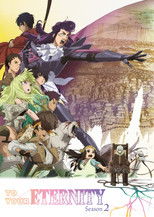
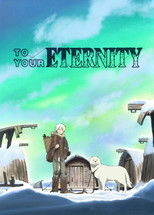
The story begins with something sent to Earth that has no body, no emotions, and no name. It first takes the shape of a rock, then of other things around it, eventually becoming a wolf and then a boy traveling alone through a frozen wilderness. With each form it copies and each life it touches, the being accumulates memories, skills, and, slowly, feelings.
This creature is Fushi, and his journey is watched over by a mysterious figure known as the Beholder. As the series progresses, Fushi gains the ability to take on the forms of people who have mattered to him, a power that carries both comfort and grief. Every transformation is a reminder of someone he could not keep.
Without spoiling where the story goes, it is enough to say that the series treats immortality not as a gift but as a burden measured in goodbyes. Fushi's growth is the spine of the entire show, and it is told with unusual patience and care.
Season Structure and Episode Format
To Your Eternity spans three seasons and 62 episodes in total, each running roughly 25 minutes. The series premiered in 2021 and wrapped up its final season in 2026, giving the story room to breathe across years of broadcast.
Rather than a single continuous plot, the show is built around arcs, each centered on a community or a companion Fushi encounters. These arcs vary in tone, from quiet survival stories to larger conflicts, but they share a structure: Fushi arrives, connects, learns, and moves on, changed by what he lived through.
The episodic rhythm suits the premise. Because Fushi retains every form he has taken, earlier characters echo through the whole series even after their stories end. Watching it in order matters, since emotional payoffs often land seasons later.
Main Cast and Characters
Reiji Kawashima anchors the series as Fushi, delivering a performance that must chart a character's entire emotional evolution, from near-blank slate to someone capable of profound attachment. Kenjiro Tsuda voices the Beholder, the detached observer whose questions about Fushi's purpose frame the series' philosophy.
Around Fushi rotates a memorable ensemble of traveling companions. Rie Hikisaka plays March, Rikako Aikawa voices the old woman Pioran, and Ryoko Shiraishi and Taku Yashiro share the role of Gugu at different ages. Eri Inagawa's Tonari, Kazuyuki Okitsu's Sandel, and Akeno Watanabe's Todo/Iris round out the recurring cast.
A special mention goes to Takehito Koyasu as Bonchien Nicoli la Tasty Peach Uralis, a character whose elaborate name matches his outsized personality. Part of the series' power comes from how fully these supporting voices are realized in limited time.
Creators and Production
To Your Eternity is based on a manga and produced through a partnership between Brain's Base, Drive, NHK Enterprises, and NHK itself. The involvement of Japan's public broadcaster is fitting; the series has a literary, almost serialized-novel quality that suits NHK's tradition of ambitious animation.
The music, composed by Ryo Kawasaki, deserves note. The score moves between sparse, wintry textures and swelling emotional cues, often providing the connective tissue between arcs. Studio work across the three seasons maintains a soft, painterly look that matches the story's fable-like register.
Adapting a long-running manga into 62 episodes meant choosing what to compress and what to let linger. The production generally favors the lingering, which is why quieter scenes land as hard as the dramatic ones.
Network, Broadcast Status, and Seasons
The series aired on NHK G and NHK Educational TV in Japan, a home usually associated with children's and educational programming that makes the show's emotional intensity all the more striking. It premiered in 2021 and concluded on 2026-03-28, with its status now listed as Ended.
Three seasons is a complete story here. Viewers coming to the series today can watch it start to finish without waiting on renewal news or unresolved cliffhangers. The final season closes Fushi's long arc, which makes this an ideal time for newcomers to catch up.
With 62 episodes at 25 minutes each, the full run sits comfortably within reach of a binge or a slow, arc-by-arc watch.
Themes, Tone, and Style
The keywords attached to this series tell the truth about it: philosophy, suffering, transformation, friendship, tragedy, survival. To Your Eternity is fundamentally a meditation on what makes a life meaningful, asked by a protagonist who cannot die and therefore must learn the value of everything the hard way.
Tonally, it swings between gentle warmth and genuine sorrow. The show is not shy about loss, and several arcs are outright heartbreaking, but the grief is always in service of the central question: does experience justify pain? Fushi's answer, built slowly over three seasons, is the series' real climax.
Visually and structurally, it leans fable. Simple setups, archetypal characters, and a wandering structure give it the feel of folklore, while its supernatural and sci-fi elements, mutation, reincarnation, multiple identities, keep it firmly in fantasy territory.
Who Will Enjoy It
This is an easy recommendation for viewers who want emotionally serious animation: fans of character-driven fantasy, of stories about found family, and of series willing to make them cry. The 8.2 rating on TMDB reflects an unusually consistent reception across all three seasons.
It also suits readers of philosophical fiction who rarely watch anime. The premise, a blank being assembled out of the lives of others, is a thought experiment first and an adventure second, and the show honors both sides of that.
Viewers looking for fast pacing or light comedy should calibrate expectations. The series rewards patience, and its saddest stretches are intentional.
Where to Watch To Your Eternity in the US
In the US, To Your Eternity is available to stream with a subscription on Crunchyroll, including via the Crunchyroll Amazon Channel. That is the simplest route for most viewers, especially those who want all three seasons in one place.
For those who prefer to own episodes, digital purchase is available through the Apple TV Store, Google Play Movies, Fandango At Home, and Amazon Video. Buying gives permanent access and suits anyone planning a rewatch of the full 62-episode run.
Availability can vary by region and change over time, so it is worth confirming current options in your own account before committing.
Frequently asked questions
How many seasons of To Your Eternity are there?
Three seasons, totaling 62 episodes of about 25 minutes each. The series premiered in 2021 and concluded with its final season in 2026, and its status is now listed as Ended, so the story is complete.
Is To Your Eternity based on a manga?
Yes. The anime adapts a Japanese manga and was produced by Brain's Base and Drive in partnership with NHK Enterprises and NHK, airing on NHK's channels in Japan.
Where can I stream To Your Eternity in the US?
Crunchyroll streams the series with a subscription, including through the Crunchyroll Amazon Channel. Episodes can also be purchased digitally via the Apple TV Store, Google Play Movies, Fandango At Home, and Amazon Video.
Who voices Fushi in To Your Eternity?
Reiji Kawashima voices Fushi across the series, portraying the immortal protagonist's gradual emotional growth. Kenjiro Tsuda voices the Beholder, the enigmatic figure who observes and guides Fushi's journey.
Is To Your Eternity sad?
Often, yes. The series deals heavily with loss, tragedy, and grief as its immortal protagonist forms bonds he cannot keep. It balances sorrow with warmth and friendship, but viewers should expect emotionally heavy arcs.


































Comments (0)
Log in or create a free account to comment, rate and write reviews.