
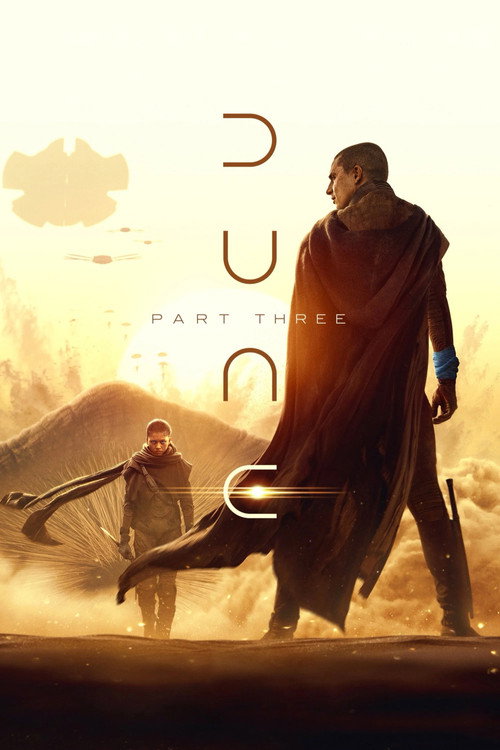
The sand has settled, the throne has been claimed, and the story that began on a desert planet is finally reaching its destination. Dune: Part Three closes Denis Villeneuve's sweeping science fiction saga, arriving in December 2026 with a promise baked into its tagline: the epic conclusion. With Timothée Chalamet and Zendaya returning, a formidable ensemble joining them, and Hans Zimmer back at the composer's desk, the final chapter arrives carrying enormous expectations — and every sign suggests it intends to meet them.
What Dune: Part Three Is About
Nearly two decades after Paul Atreides seized control of the Imperium, he sits as a ruthless Emperor — and must now reckon with everything that reign has cost. Old allies resurface, terrifying new threats rise, and betrayal waits in every shadow. Visions of imperial collapse haunt him, along with the reappearance of a long-lost love, pulling him into a conspiracy whose mystery unfolds with Chani at its center.
As enemies close in and rebellion stirs, Paul is forced to confront the true price of power and the fate of the people he loves most. The film's keywords point to a religious war, a messianic figure, political conspiracy, and a desert world — the ingredients of a space opera that promises to be as intimate as it is vast.
Adapted from Frank Herbert's novel, the screenplay comes from Denis Villeneuve and Brian K. Vaughan. The premise stays deliberately under wraps, and this guide keeps it that way: no plot details beyond the official setup.
The Cast: Familiar Faces and Powerful Newcomers
Timothée Chalamet returns as Paul Atreides, a character transformed from reluctant heir to embattled Emperor. Zendaya is back as Chani, whose role in the unfolding conspiracy appears central to the story. Rebecca Ferguson reprises Lady Jessica, while Javier Bardem returns as Stilgar and Charlotte Rampling once again plays Reverend Mother Mohiam.
Florence Pugh appears as Princess Irulan, and Anya Taylor-Joy plays Alia Atreides. Jason Momoa is listed as Hayt, and Isaach de Bankolé joins as Farok. The most closely watched new addition is Robert Pattinson, taking on the role of Scytale — a casting choice that has already generated considerable discussion among fans of the source material.
It is a deep ensemble, and the character list alone hints at how much ground the final film intends to cover. Veterans and newcomers share the screen in what looks designed to be a true convergence of the saga's threads.
Denis Villeneuve and the Making of the Finale
Denis Villeneuve directs from a screenplay he co-wrote with Brian K. Vaughan, adapting Frank Herbert's novel for the screen. Villeneuve also produces alongside Tanya Lapointe and Mary Parent, with John Harrison, Thomas Tull, and Richard P. Rubinstein serving as executive producers. Legendary Pictures and Image Nation Studios back the production.
Behind the camera, the film brings together an accomplished crew. Linus Sandgren handles cinematography, Joe Walker edits, and Hans Zimmer composes the original score — a pairing of image, rhythm, and sound that suggests the finale will be as striking to look at and listen to as it is to follow. The film is currently in post production, with a runtime listed at 150 minutes.
That runtime is notable: compact by the standards of modern epic conclusions, it hints at a disciplined, focused final chapter rather than an overstuffed one.
Themes, Tone, and Style
At its core, Dune: Part Three is a story about consequences. Paul's rise to power was never a simple victory, and the film's premise makes clear that his reign as Emperor is where the reckoning begins. Themes of messianic burden, religious war, and political conspiracy run through the material, framed against a desert planet and a galaxy-spanning Imperium.
The tone promises to blend the intimate and the operatic: personal betrayal and family fate on one side, imperial collapse and holy war on the other. As an adventure and science fiction film, it sits squarely in the space opera tradition, but the emphasis on Paul's haunted visions and the mystery surrounding Chani suggests a psychological undercurrent beneath the spectacle.
Style-wise, the combination of Sandgren's cinematography, Zimmer's score, and Villeneuve's measured direction points to a continuation of the saga's established aesthetic — vast landscapes, deliberate pacing, and weight given to every choice.
Who Will Enjoy It
Fans of the first two films are the obvious audience, and this finale is built for them: returning characters, unresolved threads, and a conclusion the collection has been building toward. Viewers who appreciate thoughtful science fiction — stories where politics, religion, and prophecy intertwine — will find plenty to engage with.
The film also welcomes newcomers drawn by its cast. Chalamet, Zendaya, Pugh, Taylor-Joy, Pattinson, Bardem, and Momoa represent one of the most stacked ensembles in recent genre cinema, and each brings a devoted following. Anyone who enjoys large-scale adventure grounded in character drama should find the 150-minute journey rewarding.
Those seeking a light, breezy watch should calibrate expectations: this is a weighty, serious conclusion, and its pleasures are cumulative rather than casual.
Where to Watch
Dune: Part Three opens in US theaters on December 15, 2026. As the film is still in post production, streaming availability has not yet been detailed; the reliable way to see it at launch will be a theatrical release.
For viewers planning ahead, checking local listings and theater chains closer to the release date is the practical move. Showtimes, formats, and premium screenings will be announced by exhibitors as the December date approaches. Once the theatrical window concludes, home viewing options are expected to follow through the usual digital and streaming channels — this guide will reflect those providers as they are confirmed.
Similar Titles Worth Exploring
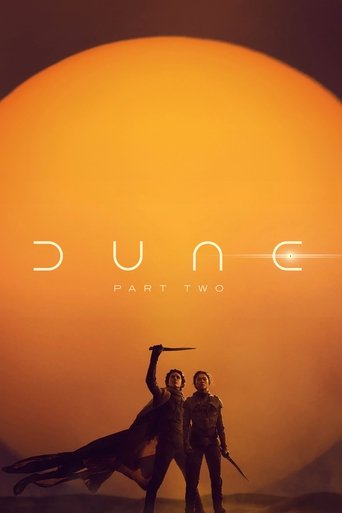
If the wait feels long, the Dune Collection itself is the natural starting point — the preceding films establish the characters, the world, and the political landscape this finale builds upon, and a rewatch pays dividends.
Beyond the collection, viewers drawn to the film's blend of space opera, messianic drama, and political intrigue have a rich genre to explore. Stories of desert worlds, religious wars, and conspiracies within galactic empires share DNA with the classic works that shaped this saga — and Frank Herbert's novel remains the definitive companion for anyone who wants the full scope of the story the film adapts.
Science fiction adventures centered on prophecy, power, and betrayal offer the closest tonal match for what the finale's premise promises.
Frequently asked questions
When does Dune: Part Three come out?
The film is scheduled for release on December 15, 2026, in US theaters. It is currently in post production, so the theatrical date is the confirmed way to see it first.
Who is in the cast of Dune: Part Three?
Timothée Chalamet returns as Paul Atreides, with Zendaya as Chani, Rebecca Ferguson as Lady Jessica, Javier Bardem as Stilgar, Florence Pugh as Princess Irulan, Anya Taylor-Joy as Alia, and Robert Pattinson joining as Scytale.
Is Dune: Part Three based on a book?
Yes. The film adapts Frank Herbert's novel, with a screenplay by Denis Villeneuve and Brian K. Vaughan. It is part of the Dune Collection and is billed as the epic conclusion.
How long is Dune: Part Three?
The listed runtime is 150 minutes. That places it among the more focused epic conclusions, promising a disciplined final chapter rather than an extended one.
Who directed Dune: Part Three?
Denis Villeneuve directs, and also produces alongside Tanya Lapointe and Mary Parent. Linus Sandgren is the cinematographer, Hans Zimmer composed the score, and Joe Walker edited the film.




















Comments (0)
Log in or create a free account to comment, rate and write reviews.