
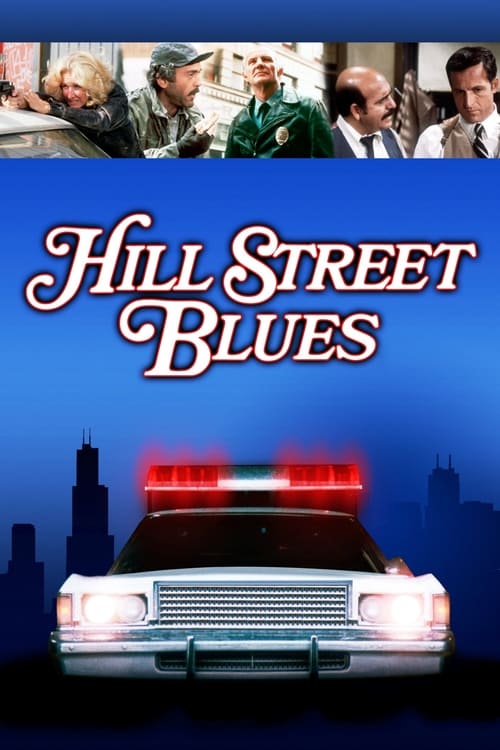
Before prestige television had a name, one scrappy NBC drama quietly rewired what a cop show could be. Hill Street Blues traded tidy case-of-the-week formulas for a tangled web of ongoing stories, morally complicated officers, and a precinct that felt genuinely lived-in. Its influence echoes through nearly every ensemble drama that followed, and it remains essential viewing for anyone curious about where modern TV storytelling began.
What Hill Street Blues Is About
The series chronicles the daily grind inside a big-city police station, following the men and women who patrol its streets and work its desks. Rather than wrapping every case neatly before the credits, the show lets investigations spill across episodes, and the private lives of the officers bleed into their professional ones.
What sets the premise apart is its refusal to sort people into heroes and villains. The cops are flawed, exhausted, occasionally corrupt, and frequently at odds with each other and with city hall. Criminals are human too, and the line between the two sides is deliberately blurry.
The tone balances authenticity with wit. Gritty procedural material sits alongside absurdist comedy, giving the precinct a rhythm closer to a workplace dramedy than a straight-laced crime thriller.
Season Structure and Episode Format
Across seven seasons and 146 episodes, the show built a template that would become standard practice decades later. A typical hour weaves together several simultaneous storylines: a case in progress, a personal crisis, a political skirmish with the brass, and a running gag or two threaded through the margins.
Episodes open with the morning roll call, a ritual that doubles as a showcase for character and comedy, and close with dangling threads carried into the next installment. Each entry runs roughly 49 minutes, giving the writers room to breathe.
Because the series ran from its premiere through 1987, its structure evolved noticeably. Early seasons establish the ensemble and the serialized approach; later ones deepen long-term arcs and let characters grow, fail, and change in ways episodic television rarely permitted at the time.
Main Cast and Characters
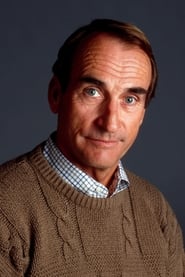
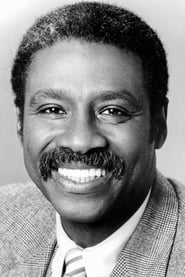
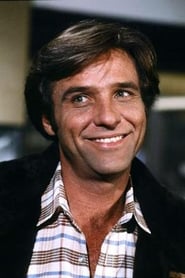
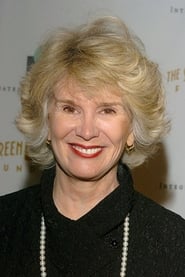
Daniel J. Travanti anchors the ensemble as Frank Furillo, the precinct's steady, principled captain trying to hold together a station full of strong personalities. Michael Warren plays officer Robert Hill, one half of a patrol partnership that became one of the show's defining dynamics.
Bruce Weitz earned lasting recognition as Mick Belker, an unkempt undercover specialist with a feral streak. Michael Conrad portrays Phil Esterhaus, the sergeant whose roll-call sign-off became the series' signature phrase, later succeeded in that post by Robert Prosky's Stan Jablonski.
The supporting bench is deep: James B. Sikking as the rigidly formal Howard Hunter, Joe Spano as community-minded Henry Goldblume, Taurean Blacque as Neal Washington, Kiel Martin as J.D. LaRue, and Betty Thomas as Lucille Bates. Few shows before or since assembled a roster this rich.
Creators and Production
Steven Bochco created the series, drawing on a vision of policing that emphasized process, paperwork, and personality over gunfights. As executive producer, David Milch shaped much of the show's distinctive voice, alongside fellow executive producer Jeffrey Lewis, helping push dialogue into looser, more naturalistic territory.
Production came through MTM Enterprises, the company behind some of the era's most respected comedies and dramas, and that pedigree shows in the writing's blend of humor and craft. Composer Mike Post supplied the theme music, a piano-driven piece that became instantly recognizable and helped signal that this was something different from standard procedurals.
The production's commitment to continuity was radical for network TV. Writers tracked dozens of characters across months of story, an approach that demanded more from viewers but rewarded them with a world that felt continuous and real.
Network, Broadcast History, and Legacy
The series aired on NBC, premiering in 1981 and running until 1987 before ending its run. Its early ratings were poor enough that cancellation seemed likely, but critical acclaim and a strong awards showing kept it alive long enough to find its audience and reshape the medium.
Its legacy is hard to overstate. The serialized ensemble model it pioneered informed a generation of dramas about institutions, from hospitals to law firms to other precincts. Shows built on overlapping arcs, large casts, and morally gray protagonists owe a clear debt to what Bochco and Milch built here.
Even decades later, the series is frequently cited in discussions of television's shift toward novelistic storytelling, and it remains a touchstone for writers and critics studying how the medium matured.
Themes, Tone, and Style
At its core, the show is about institutions under strain: good people working within a flawed system, compromise as a daily necessity, and the gap between public ideals of justice and the messy reality of enforcement. Bureaucracy, politics, and race relations all receive sustained attention.
Stylistically, it favored handheld cameras, overlapping dialogue, and a documentary-like texture unusual for its era. The visual looseness matched the writing's refusal to editorialize, letting viewers judge characters for themselves.
Humor is a crucial ingredient. The precinct's eccentrics supply genuine comedy, but the show never lets jokes erase consequence. Tragedy and absurdity coexist, which is precisely what gives the drama its staying power.
Who Will Enjoy It and Where to Watch
Viewers who love ensemble dramas like later Bochco-produced series, or modern institutional shows with large casts and long arcs, will find the DNA here. Fans of character-driven crime fiction over action spectacle are the natural audience; those wanting neat resolutions each week may need to adjust expectations.
In the US, the series is available to purchase digitally through the Apple TV Store, Google Play Movies, Fandango At Home, and Amazon Video. As a catalog title, streaming availability may vary, so checking current listings is worthwhile.
With a 7.6 rating on TMDB and a reputation that has only grown since it went off the air, it stands as one of the most historically important American dramas ever broadcast.
Frequently asked questions
How many seasons and episodes of Hill Street Blues are there?
The series ran for seven seasons totaling 146 episodes. It premiered in 1981 and concluded in 1987, with each episode running approximately 49 minutes.
Who created Hill Street Blues?
Steven Bochco created the series. David Milch and Jeffrey Lewis served as executive producers, and Mike Post composed the show's iconic theme music.
What is the famous catchphrase from the show?
"Let's be careful out there." Sergeant Phil Esterhaus, played by Michael Conrad, delivered the line during the daily morning roll call, and it became the series' signature phrase.
Is Hill Street Blues available to stream?
In the US, it can be purchased digitally from the Apple TV Store, Google Play Movies, Fandango At Home, and Amazon Video. Subscription streaming availability may change, so check current listings.
Why is Hill Street Blues considered important?
It pioneered serialized storytelling with a large ensemble cast on network television, influencing decades of dramas. Its naturalistic style, overlapping arcs, and morally complex characters set a template the medium still follows.














Comments (0)
Log in or create a free account to comment, rate and write reviews.