

Some actors carry a series on their shoulders; others make every scene they touch better. Lee Hee-jun belongs firmly to the second group. A Daegu-born South Korean performer with a filmography spanning dozens of movies and television series, he has become one of the most reliable supporting and character actors in Korean entertainment, equally at home in thrillers, comedies and fantasy romance. International viewers who discovered Korean drama through Netflix have likely already seen him, even if they did not know the name.
Who Is Lee Hee-jun?
Lee Hee-jun, sometimes romanized as Lee Hee-joon, is a South Korean actor born on June 29, 1979, in Daegu, South Korea. He works primarily in film and television, and over the course of a career that now stretches across more than sixty screen credits, he has built a reputation as a versatile, chameleonic performer.
Why does he matter? Because modern Korean screen storytelling depends heavily on the supporting ecosystem around its leads. A thriller like Mouse or a genre-bender like A Killer Paradox only works if the secondary characters feel fully lived-in, and Lee has made a career of delivering exactly that. His characters are often the ones audiences remember long after the plot details fade.
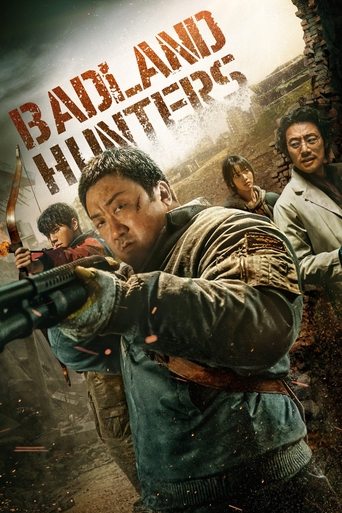
For viewers in English-speaking markets, he is a familiar face from streaming hits: the obsessive Go Moo-chi in Mouse, the menacing Song Chon in A Killer Paradox, the drifter Yang Gi-su in the post-apocalyptic action film Badland Hunters. Each role is distinct, yet each bears his unmistakable intensity.
Early Life and Background
Lee Hee-jun was born on June 29, 1979, in Daegu, one of South Korea's largest cities and a place with its own distinct regional identity and dialect. Beyond his birth date and birthplace, publicly documented details about his early years remain limited, which is not unusual for Korean character actors who rose to prominence through work rather than celebrity.
What is clear is the trajectory: he entered the industry through smaller screen parts and steadily accumulated credits until the volume and quality of his work made him impossible to overlook. His path reflects a common and respected route in Korean entertainment, where craft, persistence and memorability in small roles eventually translate into bigger opportunities.
Career Beginnings and Early Roles
Lee's early career followed the classic Korean supporting-actor apprenticeship. He appeared in small film parts and television bit roles, learning the rhythms of both mediums. A notable early screen moment came in 2010, a year that proved pivotal for him in several ways.
That year he appeared in the KBS Drama Special anthology, playing Mickey's #1 guy, and took a small role as a police officer in the acclaimed film The Yellow Sea, directed within one of Korean cinema's most celebrated crime-thriller traditions. He also appeared on the popular television program Running Man in 2010. These were modest credits, but they placed him inside major productions and alongside established names, and audiences began to register his presence.
The lesson of this period is simple: Lee treated every minor role as an audition for the next one. The small cop in The Yellow Sea and the anthology characters were stepping stones, and he climbed them quickly.
The Breakthrough: The Flu and The Legend of the Blue Sea
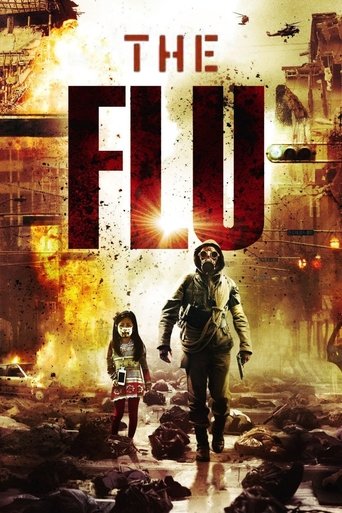
Lee's breakthrough arrived in the first half of the 2010s. In 2013 he appeared in The Flu, a big-scale disaster thriller about a deadly outbreak, playing Byung-Ki. The film was a commercial and high-profile release, and Lee's performance gave a human, unsettling edge to a story that could easily have been all spectacle.
Television then widened his audience dramatically. In 2016 he played Jo Nam-doo, also known as Park Moo, in The Legend of the Blue Sea, a fantasy romance series with a huge domestic and international following. His comic timing and easy chemistry with the cast made him a fan favorite, and for many overseas viewers this was the first time the name Lee Hee-jun became attached to a face.
The combination mattered: The Flu showed he could anchor tension in a blockbuster, while The Legend of the Blue Sea proved he could do lightness and charm. That dual credibility became the foundation of everything that followed.
Notable Roles Through the Decades
2010s: After his early anthology and anthology-adjacent work, including the KBS Drama Special in 2010 and a return to anthology-style television with Drama Stage in 2017, Lee moved into higher-profile film and drama roles. The Flu in 2013 and The Legend of the Blue Sea in 2016 established him as a dependable scene-stealer across genres.
2021 was a landmark year. He played a criminal in Vincenzo, the stylish crime-comedy series that became a global streaming phenomenon, and then delivered one of his most acclaimed performances as Go Moo-chi in Mouse, a dark psychological thriller in which his character's grief and obsession gave the series much of its emotional weight. Many critics and fans consider Mouse the role that best showcases his dramatic range.
2024 brought an extraordinary run. He played Song Chon in A Killer Paradox, a Netflix thriller where his chilling, unpredictable detective became one of the year's most talked-about performances. On the big screen he appeared as Yang Gi-su in Badland Hunters, the post-apocalyptic action film, and as Sang-gu in the comedy Handsome Guys. Few actors could move that fluidly between menace, action and comedy within a single year.
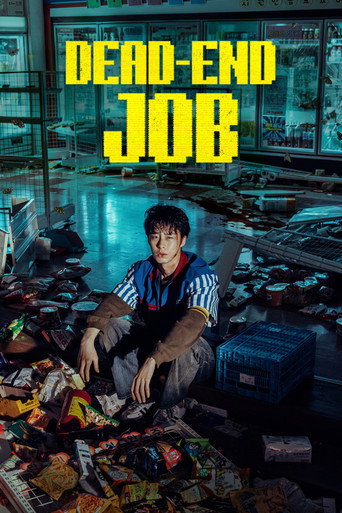
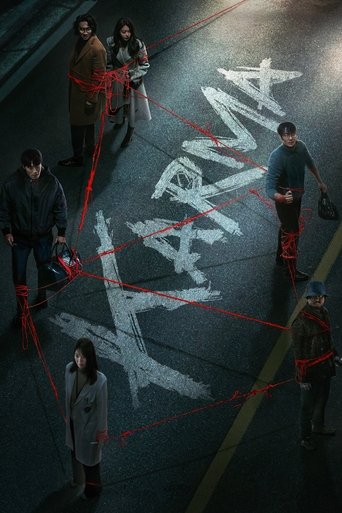
2025 continued the momentum: Park Jae-yeong in Karma, Kang Chi-mok, also known as the Restaurant Chai President, in Nine Puzzles, and Peter Kwon in Love Scout. And 2026 promises more, with Lee cast as the Head of Spider Staffing Agency in the series Dead-End Job.
Style, Range and Recurring Strengths
Lee Hee-jun's defining quality is transformation. He physically and vocally reshapes himself for each part, so much so that viewers sometimes recognize him only halfway through a series. His Go Moo-chi in Mouse is raw and wounded; his Song Chon in A Killer Paradox is controlled and terrifying; his Jo Nam-doo in The Legend of the Blue Sea is breezy and funny. The through-line is total commitment.
He excels at characters living on the edge of something, desperation, obsession, grief, or violence, and he can pivot from menace to humor within a single scene. That tonal flexibility is why directors keep casting him in genre pieces: thrillers, disaster films, crime comedies and fantasy romances all benefit from an actor who can hold both darkness and light.
He also embodies a particular strength of the Korean industry: the character actor as genre specialist. Like the best supporting players, Lee makes protagonists look better while quietly walking away with the scene.
Awards and Recognition
Detailed public records of Lee Hee-jun's individual awards and nominations are limited in the available information, so a full accounting of his trophy case cannot be responsibly given here. What is beyond dispute is the recognition he has earned from audiences and the industry itself.
His career volume, more than forty films and twenty-eight television series, speaks to sustained demand. Repeated casting in high-profile streaming projects such as Vincenzo, A Killer Paradox and Badland Hunters, and in prestige thrillers like Mouse, functions as its own form of industry endorsement. In Korean entertainment, where production schedules are punishing and competition fierce, that level of continued employment is a meaningful measure of respect.
Recent and Upcoming Work
Lee's recent output shows an actor at the height of his powers and busier than ever. In 2025 alone he appeared in three series: Karma, an ensemble drama where he played Park Jae-yeong; Nine Puzzles, a mystery in which he took on the dual-named role of Kang Chi-mok, also known as the Restaurant Chai President; and Love Scout, playing Peter Kwon.
Looking ahead, he is attached to Dead-End Job, slated for 2026, in which he plays the Head of Spider Staffing Agency. Given his track record of elevating genre material, the role is one to watch.
For international viewers, the practical takeaway is that new Lee Hee-jun content arrives regularly on major streaming platforms, making him one of the easier Korean character actors to follow in real time.
Legacy and Where to Start
Lee Hee-jun's legacy is still being written, but its shape is already clear: he is the kind of actor whose presence signals quality. In an era when Korean drama and film have become global viewing habits, performers like him are the connective tissue that makes the industry's ambitious genre storytelling work.
If you are new to his work, start with Mouse, his most emotionally devastating performance and a masterclass in sustained intensity. Follow it with A Killer Paradox, where his Song Chon is a genuinely chilling creation. For his lighter side, The Legend of the Blue Sea remains the ideal entry point. Badland Hunters shows his action-movie credentials, and Vincenzo offers him within one of the most-watched Korean series ever streamed.
Watch those five and you will understand why a supporting actor from Daegu became one of Korean screen storytelling's most trusted faces.
Frequently asked questions
Who is Lee Hee-jun?
Lee Hee-jun, also romanized Lee Hee-joon, is a South Korean actor born June 29, 1979, in Daegu. Known for character-driven roles, he has appeared in more than forty films and twenty-eight television series, including Mouse, A Killer Paradox, Vincenzo and Badland Hunters.
What is Lee Hee-jun's best-known role?
Many viewers point to Go Moo-chi in the 2021 thriller Mouse as his defining performance. His Song Chon in A Killer Paradox (2024) and his comic turn in The Legend of the Blue Sea (2016) are also widely recognized fan favorites.
Was Lee Hee-jun in Vincenzo?
Yes. He appeared in the 2021 hit series Vincenzo in a criminal role. The show's global popularity introduced many international audiences to his work, alongside his same-year performance in Mouse.
What movies has Lee Hee-jun been in?
His film credits include The Flu (2013), The Yellow Sea (2010), Badland Hunters (2024) and Handsome Guys (2024). His overall filmography spans roughly forty movies alongside twenty-eight television series.
Does Lee Hee-jun have any upcoming projects?
Yes. He is set to appear in the 2026 series Dead-End Job as the Head of Spider Staffing Agency. His recent 2025 credits include Karma, Nine Puzzles and Love Scout.























Comments (0)
Log in or create a free account to comment, rate and write reviews.