

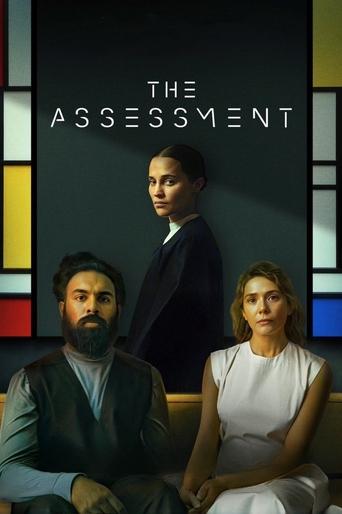
Alicia Vikander is one of the most versatile Swedish actresses of her generation, an performer who moves between intimate European dramas and large-scale Hollywood productions with apparent ease. Born in Gothenburg, she built a career spanning dozens of films and television projects, becoming internationally known through roles like the artificial humanoid Ava in Ex Machina and painter Gerda in The Danish Girl. For audiences wondering why her name keeps appearing in awards conversations and streaming recommendations, this profile offers a grounded look at her background, her most significant work, and the titles worth watching first.
Early Life and Background
Alicia Amanda Vikander was born on 3 October 1988 in Gothenburg, in Västra Götalands län, Sweden. The west-coast city, Sweden's second largest, remains central to any account of her origins, and she is consistently described as Swedish-born and Gothenburg-raised in profiles of her career.
Beyond her birth date and birthplace, verified details about her childhood and family background are limited in the public record, so this article sticks to what is documented rather than filling gaps with speculation.
Career Beginnings and Debut
Vikander's career stretches back to her childhood, and over the years she accumulated a substantial body of work in Swedish film and television before English-language audiences learned her name. Her early screen work in her home country gave her the foundation that later international roles would build on.
Her feature film career took off with Swedish cinema, and her performance in the drama Pure earned her the Guldbagge Award, Sweden's most prominent film honor, for Best Actress. That early national recognition marked her as a talent to watch well before Hollywood came calling.
Two 2012 releases then changed her trajectory. She played Queen Caroline Mathilde in the Danish historical drama A Royal Affair, a role that showcased her command of period material, and she appeared as Kitty in Anna Karenina, Joe Wright's stylized literary adaptation. Together, the two films introduced her to international festival and art-house audiences.
Breakthrough: The Year Everything Changed
If one stretch of work cemented Vikander's international status, it came in the mid-2010s. In 2015 alone she appeared in an extraordinary cluster of releases: Ex Machina, The Danish Girl, The Man from U.N.C.L.E., and Burnt. Few actors have delivered such a concentrated run of high-profile roles in a single year.
Ex Machina, Alex Garland's spare and unsettling science-fiction chamber piece, cast her as Ava, a humanoid robot whose consciousness is the film's central question. The performance required extraordinary physical and vocal control and became one of the defining screen performances of the decade in the genre.
The Danish Girl gave her the role of Gerda, and the film brought her the widest recognition of her career to date, including major international accolades. It remains the performance most closely associated with her name.
Notable Roles in the 2010s
Vikander's 2010s filmography reads like a tour through contemporary genre cinema. In 2013 she appeared in The Fifth Estate as Anke Domscheit-Berg, part of the drama surrounding the WikiLeaks story. In 2014 she took on fantasy in Seventh Son as Alice Deane and the Australian crime drama Son of a Gun as Tasha, showing early on that she was comfortable far from period drawing rooms.
The mid-decade brought her biggest mainstream exposure. The Man from U.N.C.L.E. cast her as Gaby Teller in Guy Ritchie's stylish spy adventure, while Jason Bourne in 2016 put her opposite Matt Damon as CIA operative Heather Lee. The Light Between Oceans, also from 2016, returned her to intimate emotional territory as Isabel Sherbourne in the coastal drama.
Then came a deliberate change of register: in 2018 she headlined Tomb Raider as Lara Croft, taking on a franchise action role and the physical training it demanded. It was a statement that she could carry a blockbuster as its lead, not just as a supporting presence.
The 2020s and Beyond
In 2019 Vikander lent her voice to Mira in The Dark Crystal: Age of Resistance, Netflix's ambitious fantasy series, adding voice performance to her range. In 2021 she appeared in The Green Knight, David Lowery's Arthurian fantasy, in the dual-credited role of Lady / Essel, a mysterious and pivotal part in one of the most discussed fantasy films of recent years.
Her most recent listed project is Hope, scheduled for 2026, in which she plays J'aur. Details about the film remain limited, but its inclusion on her slate confirms that her screen career, now spanning dozens of movies and several television series, continues to move forward.
Style, Range and Collaborators
What distinguishes Vikander is the breadth of her genre hopping. She has moved between historical drama (A Royal Affair, Anna Karenina, The Danish Girl), science fiction (Ex Machina, Jason Bourne), spy adventure (The Man from U.N.C.L.E.), fantasy (Seventh Son, The Green Knight, The Dark Crystal: Age of Resistance), action franchise work (Tomb Raider) and intimate contemporary drama (The Light Between Oceans, Burnt). Few peers cover that spectrum.
Her performances tend to be precise and physically committed; even her most controlled roles carry an undercurrent of watchfulness that suits characters with secrets, whether a robot, a spy or a queen. She is equally convincing in period costume and in minimalist contemporary settings.
A consistent thread in her career is Scandinavian and European cinema: her work in Swedish and Danish-language productions sits alongside her Hollywood output rather than being replaced by it, which is part of why her filmography feels unusually varied.
Awards and Recognition
Vikander's work has attracted significant international recognition, most notably for The Danish Girl, which brought her the widest acclaim of her career, and for Pure, which earned her a national Best Actress honor in Sweden early on. Specific, verified details about her full list of awards and nominations are limited in the sources available for this profile, so readers seeking a complete record should consult an up-to-date awards database.
What can be said with confidence is that recognition came early and repeatedly: national honors in her home country preceded international attention, and her mid-2010s run of performances made her a fixture of awards-season conversation.
Legacy and Where to Start
Vikander's legacy so far rests on two pillars: a defining genre performance and an award-recognized dramatic turn. Ava in Ex Machina stands as one of modern science fiction's great screen creations, while Gerda in The Danish Girl remains her most decorated role. Around those two anchors sits a filmography that spans nearly every major genre.
For newcomers, a sensible starting order: begin with Ex Machina, the tautest introduction to her screen presence. Follow with The Danish Girl for her dramatic depth. Add A Royal Affair for her period work and her Scandinavian roots. Then The Man from U.N.C.L.E. for her lighter, stylish side, and Tomb Raider to see her carry an action franchise. Five films, five different Vikanders.
Frequently asked questions
Who is Alicia Vikander?
A Swedish actress born in Gothenburg, known for roles including Ava in Ex Machina, Gerda in The Danish Girl, Lara Croft in Tomb Raider, and Gaby Teller in The Man from U.N.C.L.E. Her career spans dozens of films and several television projects.
When and where was Alicia Vikander born?
She was born on 3 October 1988 in Gothenburg, in Västra Götalands län, Sweden.
What is Alicia Vikander's best movie to watch first?
Ex Machina is the most common recommendation. Her performance as Ava, a humanoid robot, is widely regarded as her defining genre role and works as a standalone introduction to her screen presence.
Did Alicia Vikander win an Academy Award?
Her work, particularly in The Danish Girl, attracted major international recognition. Specific verified details about her complete awards record are limited in the sources available for this profile.
What is Alicia Vikander working on now?
Her most recent listed project is the film Hope, scheduled for 2026, in which she plays the role of J'aur. Further details about the production are limited.









































































Comments (0)
Log in or create a free account to comment, rate and write reviews.